
Backdrop pending
Back to catalog
Pulp Time title
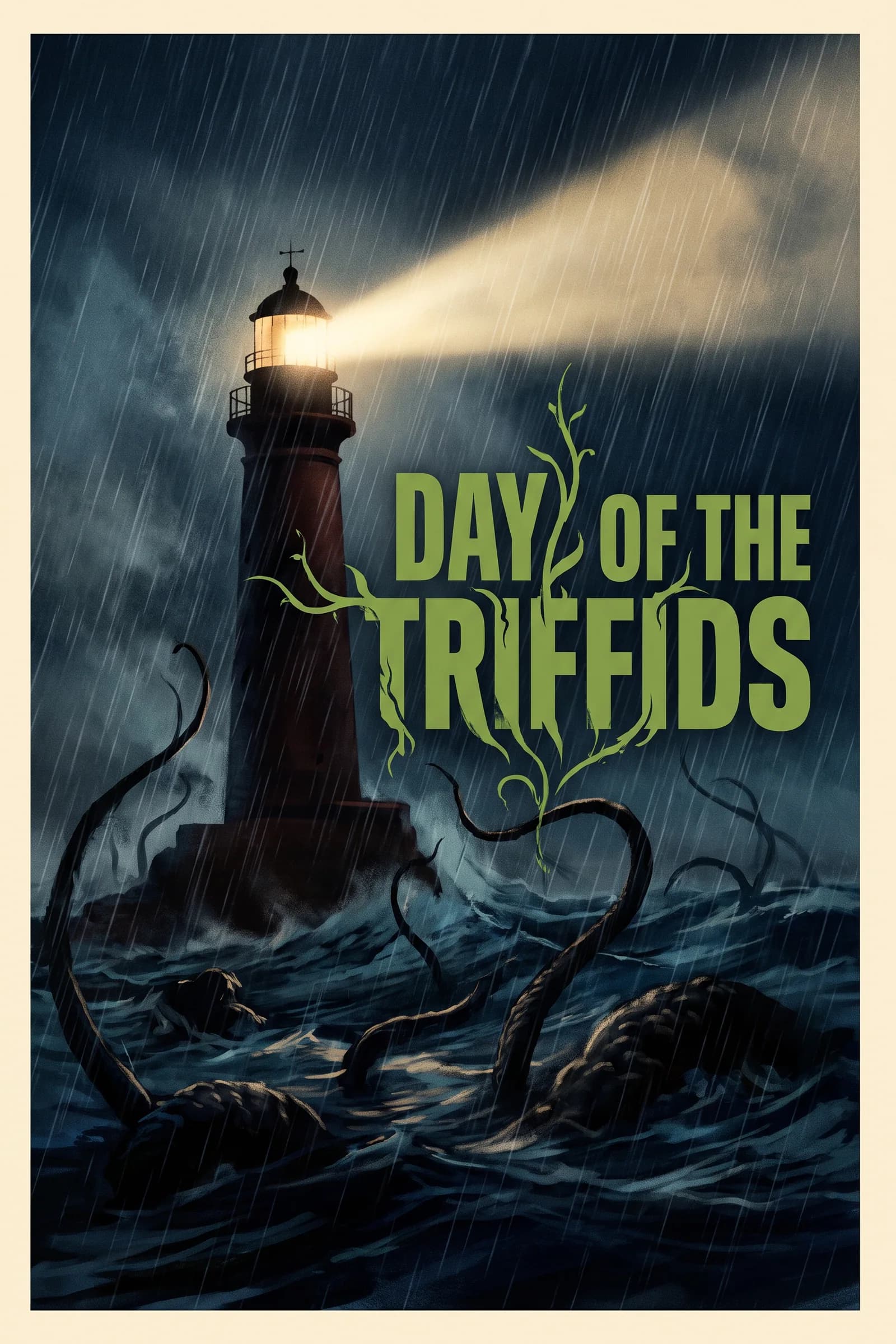
The Day Of The Triffids
Directed by Steve Sekely196294 minScience Fiction
A meteor shower turns the night sky into a blinding wonder—and leaves almost everyone who watched it sightless. Steve Sekely’s 1962 CinemaScope adaptation of John Wyndham’s 1951 novel (with additional sequences by Freddie Francis) drops Howard Keel’s merchant-marine officer Bill Masen into an emptied London: he wakes in hospital with bandages still over his eyes, removes them, and walks out into a world that has gone dark. Mobile, whip-stinging carnivorous plants called triffids—whose spores arrived with the same meteoric event—begin stalking the blinded survivors. Keel, Nicole Maurey, and a lighthouse-bound scientist couple (Kieron Moore and Janette Scott) scramble for any weapon that will stop the walking plants. The film is looser than the novel and ends more optimistically, yet its opening remains one of the great “you missed the end of the world” sequences in science fiction—the direct ancestor of the hospital awakening that opens 28 Days Later. A color British-American hybrid that still feels like the quiet morning after catastrophe.
Share this film
Send the watch link, make a branded Story card, or choose an exact 30-second moment when this title is cleared for excerpts.
Share options ready.
Community
Discuss The Day Of The Triffids
Follow durable conversations that selected or mentioned this movie.
No one has started a discussion about this movie yet.
You can be the first.
A private space for every film
Build your own archive
Sign in to log watches, rate films, save thoughts, and return to favorite moments. Nothing is posted publicly.
Sign in to startAbout the film
A meteor shower turns the night sky into a blinding wonder—and leaves almost everyone who watched it sightless. Steve Sekely’s 1962 CinemaScope adaptation of John Wyndham’s 1951 novel (with additional sequences by Freddie Francis) drops Howard Keel’s merchant-marine officer Bill Masen into an emptied London: he wakes in hospital with bandages still over his eyes, removes them, and walks out into a world that has gone dark. Mobile, whip-stinging carnivorous plants called triffids—whose spores arrived with the same meteoric event—begin stalking the blinded survivors. Keel, Nicole Maurey, and a lighthouse-bound scientist couple (Kieron Moore and Janette Scott) scramble for any weapon that will stop the walking plants. The film is looser than the novel and ends more optimistically, yet its opening remains one of the great “you missed the end of the world” sequences in science fiction—the direct ancestor of the hospital awakening that opens 28 Days Later. A color British-American hybrid that still feels like the quiet morning after catastrophe.
- Director
- Steve Sekely
- Year
- 1962
- Runtime
- 94 min
- Genres
- Science Fiction